







Llega el viernes, esto quiere decir: ¡Actividad cultural con Hablamos! Y este viernes ha sido especial ya que estamos en vísperas de San Isidro, la fiesta grande de Madrid. ¡Hasta la escuela está decorada como una verbena madrileña de las de toda la vida!
Por ello, la actividad cultural y social de esta semana ha sido conocer los orígenes de Madrid con una visita al museo de San Isidro y luego dar un paseo por el centro terminando con unas rosquillas típicas.
Como siempre, el cronista de la actividad es uno de nuestros alumnos. Como es de nivel A1 y sólo lleva 3 días estudiando español, le hemos dejado que nos lo cuente en inglés.
¡Adelante!
Our group is like a mini United Nations
Hola, me llamo Nick y soy estadounidense de Pensilvania. (And that’s all I can manage to say in Spanish at this moment)
One of the best things about studying Spanish in Madrid is that every day feels like a little adventure. This week, our Spanish school organized a cultural visit (my first one here!!) to the Museo de San Isidro, followed by a stop at the famous cafeteria El Riojano to try the traditional rosquillas de San Isidro… and honestly, it was one of my favorite days so far.
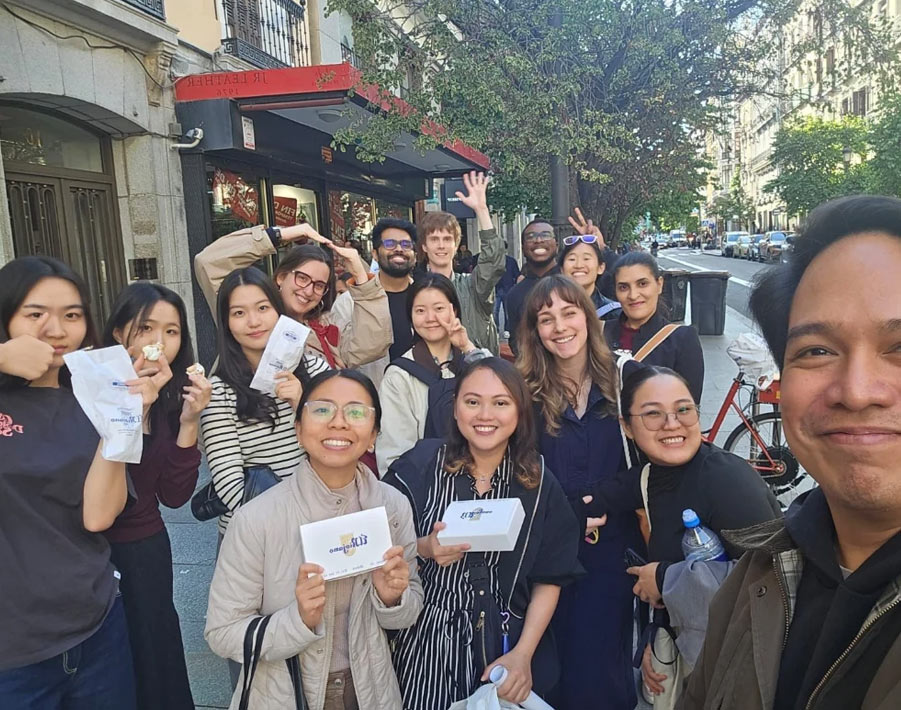
Our group is like a mini United Nations. We have students from Korea, Tunisia, Russia, Ukraine, the Philippines, Germany, England, and Brazil, plus me, the American trying very hard not to pronounce every Spanish word with a Yankee accent. Somehow, despite coming from completely different backgrounds, we all end up laughing at the same thing.
Our guide, Julia, is absolutely amazing. She’s patient, hilarious, dramatic in the best possible way, and somehow manages to turn everything into comedy shows. We adore her.
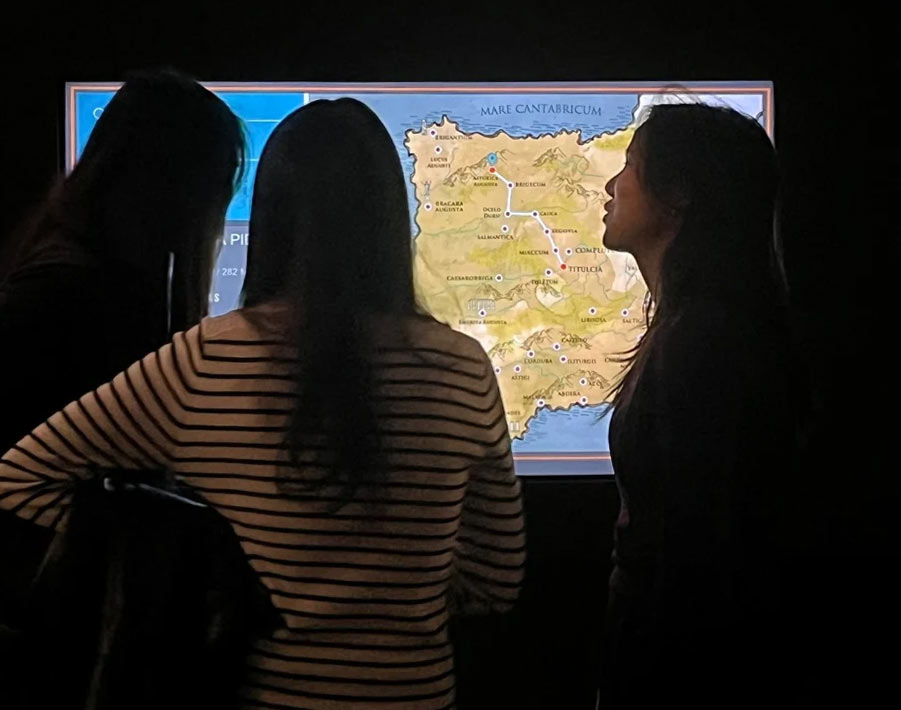
At the museum, we learned about San Isidro, the patron saint of Madrid, and about the city’s traditions and history. One of the new words we learned was verbena (festival), which is the traditional celebration where people gather, dance, eat, and enjoy the festivities in honor of San Isidro. Another useful word for this week was chulapo (a person wearing traditional Madrid festival clothing). Naturally, several students immediately wanted to know if we could buy the outfits.
The museum itself was beautiful and surprisingly peaceful. It’s funny because when you study a language abroad, you don’t just learn vocabulary from textbooks, you learn the personality of a city. Madrid feels proud of its traditions but also relaxed and welcoming. Everywhere you go, people are talking loudly, laughing, eating, and somehow standing directly in the middle of the sidewalk.
El Riojano and the rosquillas de San Isidro
After the museum, we walked to El Riojano, which felt like stepping into another century. The pastries looked incredible, and everyone suddenly became very serious about choosing desserts. The stars of the day were the famous rosquillas (ring-shaped pastries). We learned there are several kinds: listas (lemon glazed ones), tontas (plain ones), and Santa Clara (covered with white meringue icing). Personally, I loved the listas, although the Brazilian students argued passionately that the chocolate pastries deserved more attention.
One of my favorite moments was watching everyone try to pronounce Spanish pastry names with confidence. Meanwhile, I accidentally ordered too many pastries because I misunderstood para llevar (to take away). No regrets.
These kinds of experiences remind me why learning a language abroad is so special. It’s not only about grammar or memorizing verbs. It’s about sharing traditions, trying new foods, getting lost together in Madrid’s streets, and creating friendships between people who probably never would have met otherwise.
Also, very importantly: it’s about discovering that Spanish culture includes many opportunities to eat pastries, which I fully support.
¡Hasta la próxima! (See you next time!)
¡Muchas gracias por contarnos tu experiencia!
Y si tu también quieres aprender español a la vez que disfrutas de la cultura (y la gastronomía) de Madrid. ¡Escríbenos!
Hablamos, Escuela de Español. ¡Te esperamos!